Instagram Pinterest Email Twitter BlogLovin Twitter Home About Me Reading Math Social Studies Image Map

January 31, 2016

Natural Resources

We have learned that natural resources are things from our environment that help people. Examples of natural resources are trees, oil, the sun, wind and water.


 All natural resources can be put into one of three categories:
nonrenewable
renewable
alternative energy

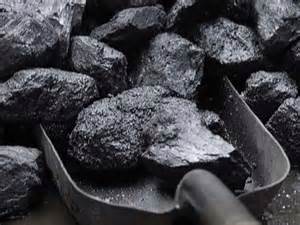
Nonrenewable resources are resources that cannot be replaced.  When they are gone, they are gone.  Minerals and fossil fuels are examples of nonrenewable resources.  Fossil fuels are made from dead plants and animals having pressure and heat on them for many years.  Then they are mined and burned for fuels.  Oil, coal and natural gases are examples of fossil fuels.  Many of our power sources are run on fossil fuels, and these resources are becoming scarce in our world.




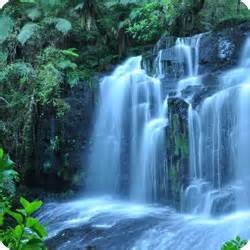
Renewable resources can be replaced.  Examples of these kinds of resources are trees, animals, oxygen and water.  These resources are able to be replaced in a short amount of time and are always being replaced in our world.


Alternative energy resources can never be taken away from our world.  They will always be with us in the form of waves, wind and solar energy.  Scientist are working on ways to use these resources for our power instead of fossil fuels.  They hope to do this so we don't loose all of the fossil fuels in our world.


STUDENTS:  There are several activities you can share on natural resources.

1.  Write a paragraph explaining how fossil fuels are made.

2.  Write a paragraph about natural resources in which you explain the difference between nonrenewable resources and renewable resources.  Also, give examples of each kind of resource.

3.  Write an acrostic poem using the word "renewable" explaining what renewable resources are as well as giving examples in the poem.

Hurricanes


Many people believe hurricanes can be one of the most dangerous storms the earth sees.


These storms are fierce and leave nothing but destruction in their paths.


They have been known to wipe out complete towns with their damaging winds and water.


STUDENTS:  Many people believe hurricanes are dangerous storms.  Do you agree or disagree?  Use evidence from the text Severe Weather Alerts to support your answer.

Book Challenge #14 & #15

Dear Students,

      This Book Challenge update had me read another book in a favorite series as well as introducing a brand new book series to me.  I will start with the favorite series.  Seth challenged me to read I Survived the Nazi Invasion, 1944,  I had a feeling I would enjoy it simply for two reasons.  One reason is because I love the I Survived series.  The other reason is because I love to read anything to do with World War II.  This book shows WWII from a different point of view.  As Americans we usually see WWII from the USA's side.  However, in Europe, many people were treated unfairly years before America joined the war.  This book showed how it was for those in Europe who were run out of their homes.  I loved the different aspects of the invasion this book showed.  The author did not limit herself to just one part of the invasion, but shows the reader lots of ways the Jews had to run to escape the Nazis.  This book is full of history, action, adventure and surprises!  I would recommend it for sure!


      The second book was one Lily S. challenged me to read.  It is called.Thea Stilton and the Chocolate Sabotage.  OH. MY. STARS!!!! Can I just say how much I am in love with this series now?  I love how it emphasizes vocabulary words.  I love the little mouse puns that are all through the book.  I love how this one incorporated so much of our social studies standards into the book. I am going to be reading more of these for sure! I really liked this one and how it was a mystery.  I usually don't like mysteries, but I love how all the friends worked together to solve the problem.  What a great life lesson that is for us!  Of course, I love the chocolate involved!  I can't wait for the next one I read.


I would recommend these books to any of you!  I know a lot of you have read the I Survived series, but if you haven't read the Thea Stilton or Geronimo Stilton books, go NOW!!!!

Love,

Mrs. Becky

January 26, 2016

Goods and Services

Almost everyone needs goods and services. People use money and trade for goods and services that they want or need.
Goods are things that are made or grown. Some goods are made, such as clothes, computers, and cars. Other goods are grown such as fruits and vegetables. All goods are made from natural resources. This does not mean that the good is a natural resource. For example, a table may be made from the wood of a tree. While the tree is a natural resource, the table would not be a natural resource.
Some of the goods that are made in the United States are sent to other countries. Those goods are called exports. Some goods are made in other countries and are shipped to the United States. These goods are called imports.
A service is work that someone does for someone else. A doctor and police are people who provide services. Some services are paid for by taxes, or money paid to the government. Taxes pay people like public school teachers and police officers for their services. Other services are not paid for with taxes. These services include lawn care, hair salons, and taxi drivers.
People that make goods are called producers, because they make or produce goods. People that purchase goods and services are called consumers. Many people are both producers and consumers. Producers depend on consumers to purchase their products. This allows them to make a profit. Consumers depend on producers to make the goods that they want and need. This is called interdependence.


STUDENTS: After reading the text and looking at the 2 world maps, answer the following prompt.  Goods and Services are sent from the United States all over the world.  Do you think that the United States is dependent on imports from other continents?  Why or why not?

January 21, 2016

A World of Art

Our world is full of all different kinds of art.
We have cave paintings from the earliest times that show us how they lived
and what they hunted.
We have simple pictures that were carved and used for storytelling as well as 
for trade.
Paintings are still treasured in museums and other places showing us how people looked
and celebrations from years ago.
Dances are done to celebrate, to show rites of passage and to entertain.
Storytelling has evolved into books, plays, movies and theater.
Music has taken us through people's emotions as they experience different times
in life.

All of these are different types of art that have been important over time to many different
societies in our world.

STUDENTS:  As you read the introduction to our text A World of Arts, you learned how art was and is so much more than just drawings and paintings.  You also learned how each one of these was important to people in our world.  Do you agree that art is important to the world in which we live?  Use evidence from the text to support your answer.

January 19, 2016

The Panama Canal

          Have you ever heard the phrase, “I had to go around my elbow to get to my mouth?”  Many people use this phrase to describe having to go out of the way to get somewhere.  Instead of a straight shot to where they wanted to go, they had many detours before they finally made it to where they wanted to go.  For many years, whenever a boat needed to get from the Atlantic Ocean to the Pacific Ocean, the sailors would have to go “around their elbow to get to their mouth.”  There was not an easy way or a short cut.  The sailors would have to navigate their boat around the Cape Horn, the area between the southern tip of South America and Antarctica. 

            Why was this a problem?  For one reason, it was a long journey.  Going around the horn would add close to 1,000 miles to each trip a sailor would make from the Atlantic Ocean to the Pacific Ocean.  While that is an inconvenience, the problem was the type of weather a sailor would have to encounter when coming into the cape.  Winds gusting at a range from 50-80 mph would meet a ship as they tried to steer through the cape.  With these winds came waves that might reach up to 90 feet high.  A crew would only have a window of about 100 days a year where they would not encounter these conditions.


            As explorers studied maps, they were convinced there had to be another way to get from one ocean to the other.  Everyone came back to one place on the map – the Isthmus of Panama.  This isthmus joins Central America to South America. To the east, the Caribbean Sea would eventually meet the Atlantic Ocean while the Gulf of Panama would merge into the Pacific Ocean on the west side.  The isthmus at one place was only 30 miles wide!  How close the two oceans were while being so far away.  Would there be a way to cut right through Panama?

            There were many problems that kept the canal from being built.  France had begun building a canal, but due to diseases, flooding and, eventual bankruptcy, they had to stop.  They wanted America to pick up where they had left off, but other problems stood in the way.  Panama had to win its independence from Colombia, and eventually did in 1903.  Since America had helped them gain their freedom, the following year, a treaty was made between the USA and Panama to allow the USA to finish building the canal. 


When finally finished in October 1913, the canal came in at 48 miles long and 200 feet wide.   The Panama Canal helped launch the United States into a world trading empire as well as allowed other countries to expand their trading.  The US Navy was able to protect America during times of war thanks to the Panama Canal.  Ultimately, the east could finally get to the west without “having to go around their elbow to get to their mouth.”  

STUDENTS: Explain why the Panama Canal was necessary for the world.  Use evidence from the text and the map to support your answer.

January 12, 2016

Which Government is for You?

What Kind of Government Would You Want Ruling You?


            In our world, many people have different visions of how people should be governed.   In early civilizations, a monarchy was the way groups of people were ruled.  In a monarchy, a monarch, a king or queen, would rule over the people of a state or country.  This leader was born into this position and held the position for life or until the next of kin was ready to assume the throne.  The monarch would make the decisions he or she thought was best for the people or even primarily for the monarchy.  The king or queen would not listen to, and some didn’t care about the people they led.  Some countries do have groups of men and women who will help the monarch make laws and other decisions that will be in favor of the people.  Ultimately though, the monarch makes the absolute decisions. 

            There were some citizens who abided under the rule of a monarch, did not appreciate being told what to do and how to live.  Sometimes these citizens would rise up and revolt.  The fighting might result in a change in the government to a democracy.  Others would just up and leave their home country to find a new land to begin a democracy, a type of government where the people have an active role in voting for those taking part in the government.  Ancient Greece was one of the first countries to have a democracy.  Their form of democracy was called a direct democracy.  This meant that each person was able to have a voice as to what going to happen and the rules that would be put in place.  The majority of countries with a democracy now have a representative form of democracy.  This allows the citizens to vote for those they want representing, or speaking for, them.  The candidates, men and women wanting to run for a place in the government, tell the citizens the ideas they have for the state or country.  Then, the citizens are encouraged to vote for the candidate they feel would do the best job.  While they are some stipulations to holding an office in a democracy, most any citizen can hold some kind of office in the government unlike a monarchy.  Time limits called, terms, were also set so one person is not always in an office.

            While some citizens fought the monarchy for a democracy, some citizens wanted to be in complete control or to dictate what happened in the government.  In this form of government, a dictator would come in with force and use their armies to wipe out the leaders that were presiding.  When the dictator would gain complete control, they would make all decisions without consulting the citizens of that country.  He or she would not listen to the citizens of the country when making decisions that would affect them.  What made a dictatorship different from a monarchy was the laws made by the dictator were usually very unfair to the citizens.  Plus, the dictator rarely followed the rules himself even though punishment was given to citizens who broke the laws.  A dictator was usually in office until another person or group of people were able to take back control.

            Each of these kinds of governments is found all over the world.  While some of these are better than others, no type is perfect.  Which do you believe is best?


STUDENTS:  After reading the text and viewing the diagram above, which government would you like to have where you live?  Why would you choose this form of government for your life?  Use evidence from the text to support your answer.